FieldGuide: quarterly reporting for a philanthropic portfolio, as one audited record instead of thirty spreadsheets
THE BRIEF
Boundless Earth runs its philanthropy as Epics – multi-year programmes of change, each led by an Epic Captain and delivered through roughly thirty partner organisations. Every quarter each partner reports what it delivered, each Captain adds judgement, and the two are assembled into a report the Steering Committee can act on. That used to happen in spreadsheets.
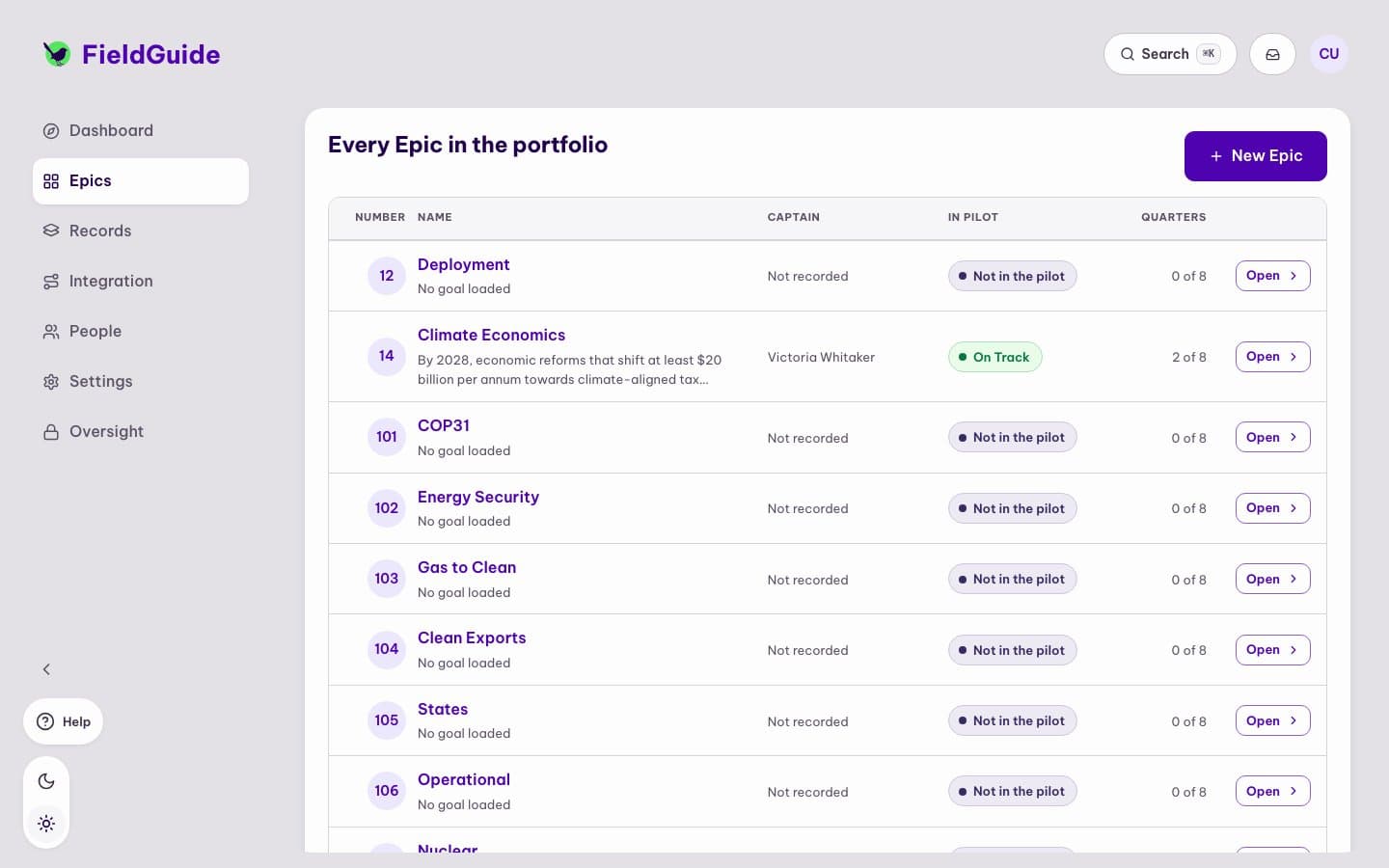
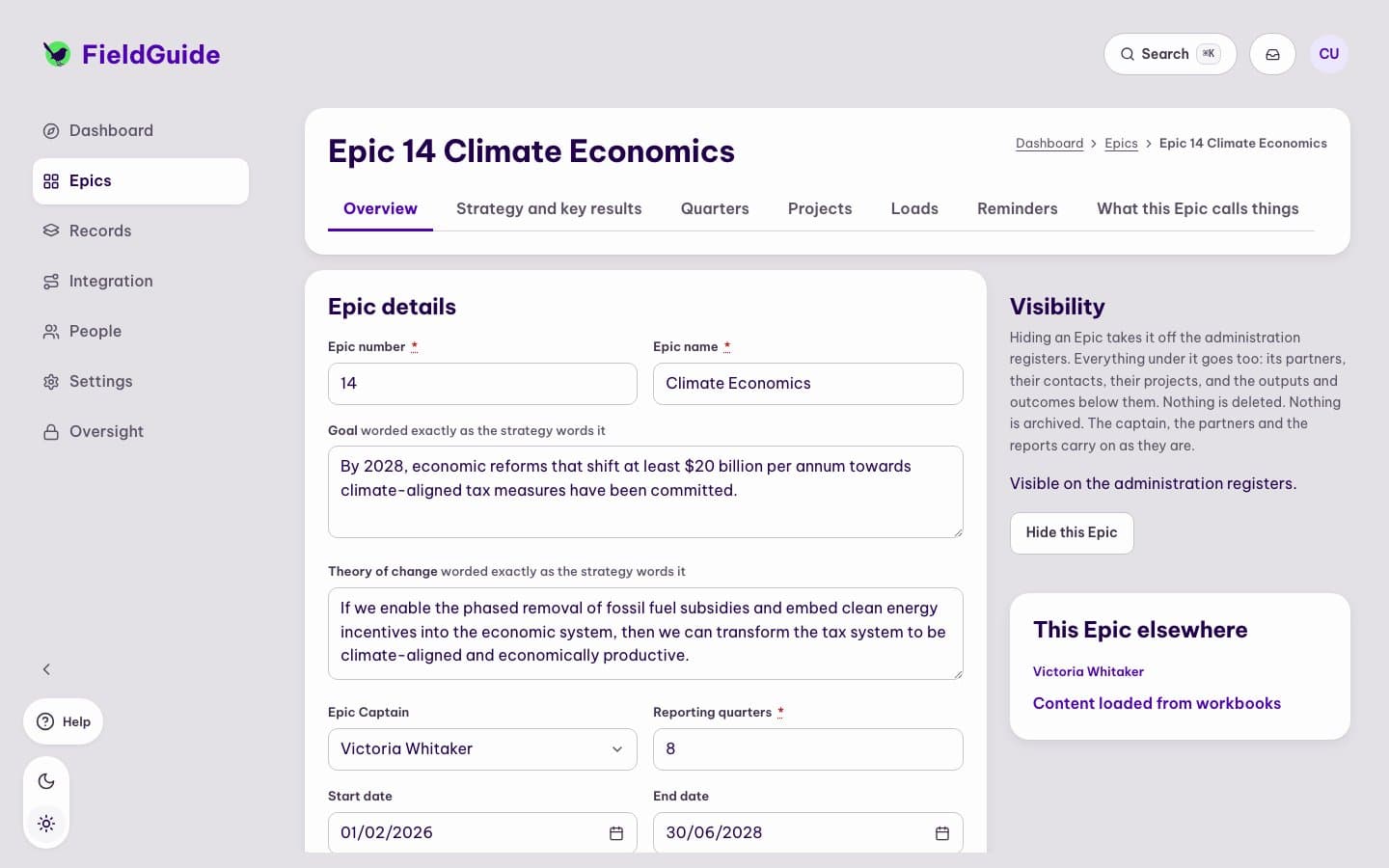
FieldGuide replaces the spreadsheets with one structured, searchable, audited record of what the money actually did. A partner is asked once and shown what they have already told the funder; a Captain's report sits beside the partner's return; the assembled quarterly report is built from both rather than retyped. The pilot is Epic 14, Climate Economics, with its own Captain, goal and eight quarters tracked from the register.
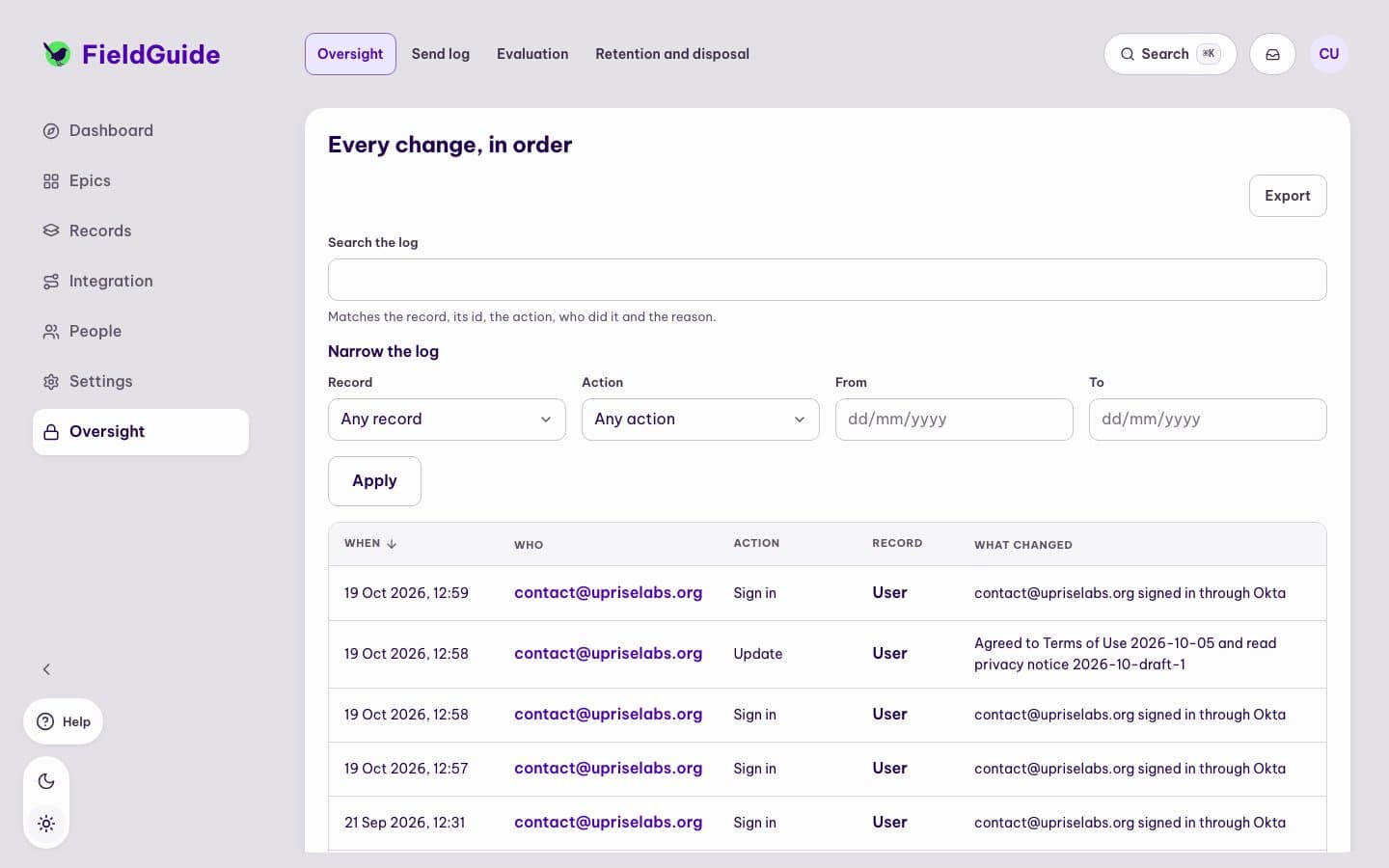
The record has to survive an audit years after the people who made a decision have moved on, so the platform is built on Postgres row-level security – a partner's session can only ever read its own rows – with every sign-in, agreement and change written to an oversight log that reads in order and exports. Staff sign in through the funder's Okta; partners through their own door. An overnight read of Tahua, the grants system of record, places each Epic's rows, translates them and records what it did, with mapping, placements, change sets and write-back all visible to an administrator.
It is a NestJS API and a Next.js application over a single Prisma schema, in a monorepo with the database roles, request context, configuration validation, logging, error tracking and the test and CI harness laid as the foundation first. The counts are the honest measure of what shipped: one hundred and eleven models, two hundred and twenty-five migrations, one hundred and one controllers, eighty-seven pages – from a partner's return to the Captain's assembled quarterly report.
Results
Screens from the build